
การจัดการความรู้และถ่ายทอดเทคโนโลยีการย้อมสีครามธรรมชาติแบบใหม่บนเส้นด้ายฝ้ายสำหรับวิสาหกิจชุมชน
Article Sidebar
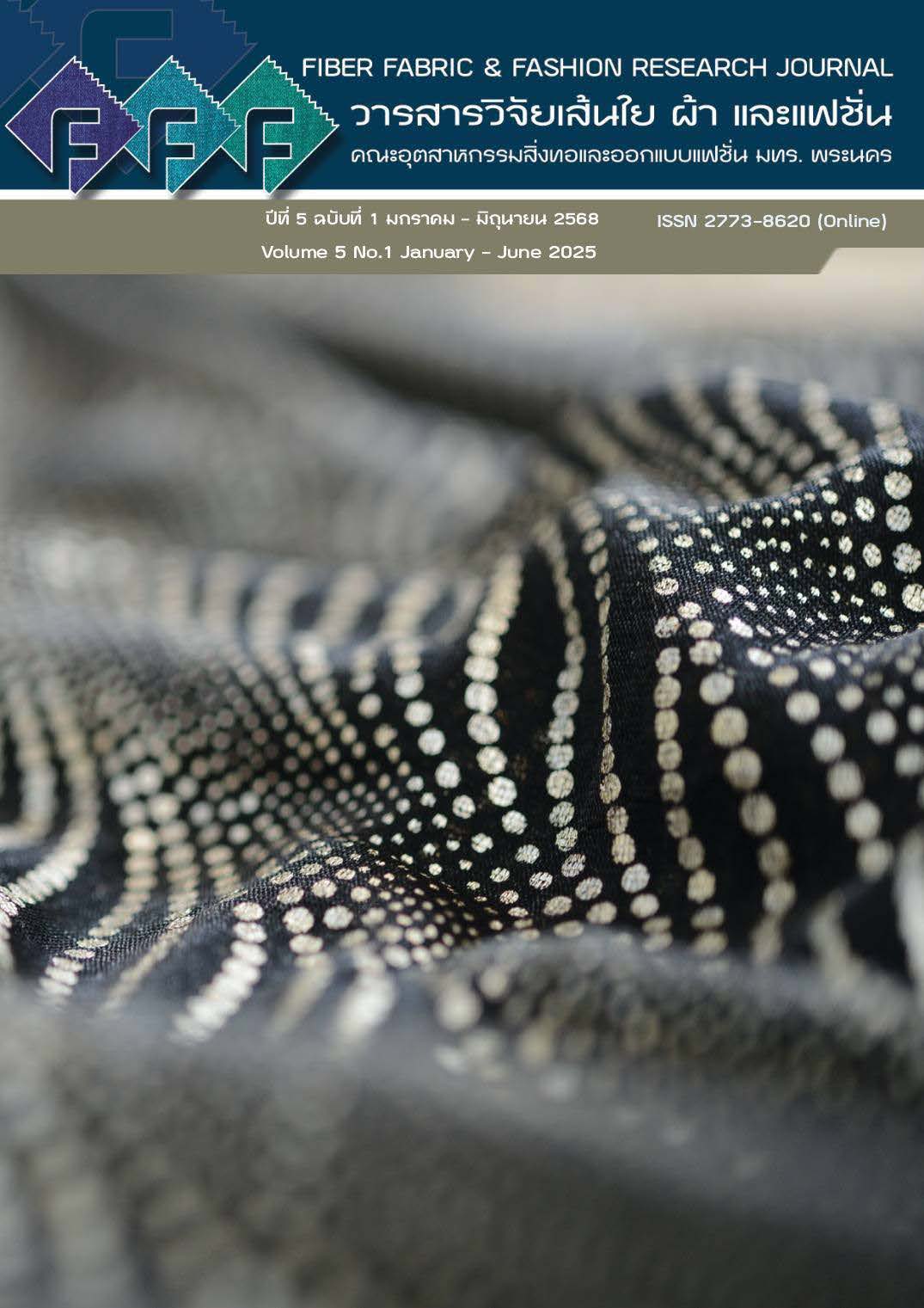
Main Article Content
บทคัดย่อ
งานวิจัยนี้มีวัตถุประสงค์เพื่อจัดการความรู้และถ่ายทอดเทคโนโลยีการย้อมสีครามธรรมชาติแบบใหม่บนเส้นด้ายฝ้ายสำหรับวิสาหกิจชุมชน โดยดำเนินการคัดเลือกวิสาหกิจชุมชนเป้าหมายในพื้นที่จังหวัดศรีสะเกษ จากนั้นดำเนินการอบรมถ่ายทอดเทคโนโลยีทั้งภาคทฤษฎีและภาคปฏิบัติ ครอบคลุมเนื้อหาด้านเทคนิคการย้อมสีครามธรรมชาติแบบใหม่บนเส้นด้ายฝ้าย ความรู้เบื้องต้นเกี่ยวกับเส้นใยฝ้าย การเตรียมเส้นด้ายฝ้ายเพื่อการย้อมสี หลักการออกแบบผลิตภัณฑ์และการสร้างงานต้นแบบ และการบริหารจัดการต้นทุน พร้อมทั้งจัดทำคู่มือองค์ความรู้เพื่อเป็นเอกสารอ้างอิง เทคนิคการย้อมสีครามแบบใหม่ที่พัฒนาขึ้นใช้ครามเปียก โซดาไฟเกล็ด และไธโอยูเรียไดออกไซด์ (ผงก่อคราม) เป็นองค์ประกอบหลัก ซึ่งสามารถย้อมสีได้ภายในระยะเวลาอันสั้น (ประมาณ 20-30 นาที) แทนที่กระบวนการแบบดั้งเดิมที่ใช้เวลานานถึง 15 วัน ผลการดำเนินงานพบว่ามีวิสาหกิจชุมชนเข้าร่วมโครงการทั้งสิ้น 9 แห่ง มีผู้เข้าอบรม 72 คน ผลการประเมินความพึงพอใจของผู้เข้าร่วมจำนวน 58 คน พบว่ามีความพึงพอใจโดยรวมอยู่ในระดับมากที่สุด (ค่าเฉลี่ย 4.29 จากคะแนนเต็ม 5.00) ด้านเทคนิคการบรรยายและการปฏิบัติมีความพึงพอใจมากที่สุด (ค่าเฉลี่ย 4.54) และด้านการนำองค์ความรู้ไปประยุกต์ใช้มีค่าเฉลี่ย 4.20 นอกจากนี้ผู้เข้าร่วมการอบรมยังสามารถนำความรู้ไปใช้ประโยชน์ต่อการประกอบอาชีพและเพิ่มประสิทธิภาพในการทำงานได้อย่างมีนัยสำคัญ ผลการวิจัยแสดงให้เห็นว่าการบูรณาการระหว่างการจัดการความรู้เชิงองค์กรและเทคโนโลยีการย้อมสีครามสมัยใหม่สามารถยกระดับศักยภาพวิสาหกิจชุมชนได้อย่างมีประสิทธิผล
Article Details

อนุญาตภายใต้เงื่อนไข Creative Commons Attribution-NonCommercial-NoDerivatives 4.0 International License.
เอกสารอ้างอิง
Splitstoser, J. C., Dillehay, T. D., Wouters, J., & Claro, A. (2016). Early pre-Hispanic use of indigo blue in Peru. Science advances, 2(9), e1501623.
Zhang, L., Wang, L., Cunningham, A. B., Shi, Y., & Wang, Y. (2019). Island blues: indigenous knowledge of indigo-yielding plant species used by Hainan Miao and Li dyers on Hainan Island, China. Journal of Ethnobiology and Ethnomedicine, 15(1), 31.
Li, S., Cunningham, A. B., Fan, R., & Wang, Y. (2019). Identity blues: the ethnobotany of the indigo dyeing by Landian Yao (Iu Mien) in Yunnan, Southwest China. Journal of Ethnobiology and Ethnomedicine, 15(1), 13.
Vankar, P. S. (2000). Chemistry of natural dyes. Resonance, 5(10), 73-80.
รัตนพล มงคลรัตนาสิทธิ์, จรูญ คล้ายจ้อย, วาสนา ช้างม่วง, ก้องเกียรติ มหาอินทร์, สาคร ชลสาคร, เกษม มานะรุ่งวิทย์, นงนุช ศศิธร, ณัฐดนย์ รุ่งเรืองกิจไกร, นฤพน ไพศาลตันติวงศ์, ทองใส จำนงการวิรัช วงศ์ภักดี และสมพร ติยะศรี. คู่มือองค์ความรู้การย้อมสีครามจากธรรมชาติแบบใหม่บนเส้นด้ายไหม และฝ้ายในเชิงพาณิชย์. ขอนแก่น: บริษัท ก-ฮ จำกัด. 2560.
พัชนีย์ ด้วงนิล. (2554). การพัฒนาวิธีการที่เหมาะสมสำหรับการหาปริมาณอินดิโกในครามหมัก. (วิทยานิพนธ์ปริญญามหาบัณฑิต, มหาวิทยาลัยเชียงใหม่).
Nakpathom, M., Somboon, B., Narumol, N., Mongkholrattanasit, R., Chitichotpanya, P., & Vuthiganond, N. Optimization of indigo dyeing on modal fabrics using thiourea dioxide as an environmentally friendly reducing agent. Journal of Metals, Materials and Minerals, 35(3), 2025, e2345-e2345.
Cheng, M., Gong, J., Li, Z., Li, Q., Fang, K., Zhang, C., ... & Liu, R. (2023). pH-Controlled bio- reduction of indigo with S. cerevisiae whole-cell biotransformation. Textile Research Journal, 93(9-10), 2290-2302.
Benli, H. (2024). Bio-mordants: a review. Environmental Science and Pollution Research, 31(14), 20714-20771.
Crossan, M. M. (1996). The knowledge-creating company: how Japanese companies create the dynamics of innovation. Journal of International Business Studies, 27(1): 196-201.
