Impacts of ENSO and Extreme Rainfall Events on Water Security in the Mae Chaem Watershed, Chiang Mai Province
Keywords:
ENSO, extreme rainfall, water security, Mae Chaem watershed, climate variabilityAbstract
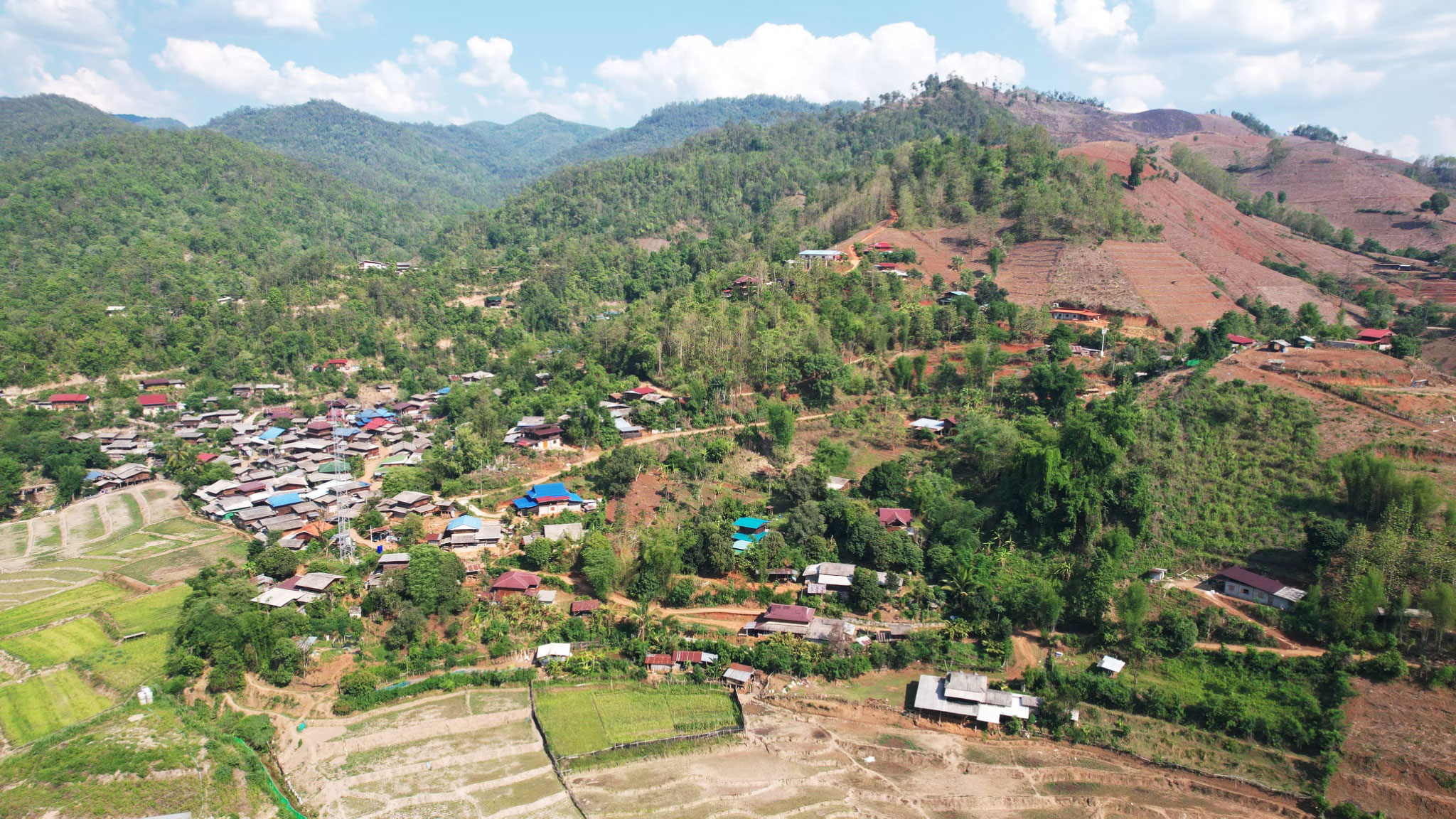
Background and Objectives : Water security is recognized as one of the critical challenges of the twenty-first century, particularly in mountainous agricultural areas that primarily rely on rainfall. This issue has become increasingly complex under climate variability and climate change, which directly affect rainfall amount, frequency, and seasonal distribution, thereby influencing both hydrological systems and agricultural livelihoods. The El Niño–Southern Oscillation (ENSO) exerts a strong influence on Southeast Asia; generally, El Niño is associated with drought conditions, while La Niña tends to increase flood risk. However, these relationships vary depending on local topographic characteristics and rain-shadow effects. In recent decades, Thailand has experienced more frequent extreme rainfall events (“rain bombs”), which are short-duration but high-intensity storms causing flash floods, landslides, soil erosion, and agricultural losses. The Mae Chaem watershed in Chiang Mai Province represents a case study that reflects such vulnerability. Its steep terrain and the prevalence of monocropping practices, such as maize cultivation, have weakened ecosystem resilience, while dependence on rainfall and small-scale water storage systems cannot adequately meet water demand during the dry season. At the same time, in years with abundant rainfall, excess water cannot be effectively captured and utilized. Consequently, communities in Mae Chaem face both drought and flooding within short timeframes. Therefore, this study aims to investigate: (1) the relationship between ENSO and rainfall in the Mae Chaem watershed, Chiang Mai Province; (2) the intensity and frequency of extreme rainfall events using the Gumbel distribution; and (3) the impacts on water balance and the water security of highland communities.
Methodology : This research employed 60 years of historical rainfall data (1964–2024) from the Mae Chaem meteorological station and nearby areas, together with the Oceanic Niño Index (ONI) to classify years according to ENSO conditions, as well as agricultural community water use data from the Mae Chaem watershed. The analytical framework comprised: (1) analyzing the ENSO–rainfall relationship using statistical comparisons of average rainfall under El Niño, La Niña, and Neutral phases; (2) analyzing extreme rainfall events using the Gumbel distribution model to estimate the return period of maximum daily rainfall; and (3) assessing water balance (Supply–Demand Balance) through the empirical formula of Prakob (1996) to calculate water yield, and applying the CWR-RID program to estimate crop water demand, which was then compared with household and agricultural water use to reflect the status of water security in each year.
Main Results : The findings revealed that El Niño significantly reduced rainfall in the Mae Chaem watershed and was associated with 13 drought events over the past six decades, with annual rainfall dropping as low as 379.5 mm in some years. By contrast, La Niña showed no consistent correlation with increased rainfall, except in 2022 when rainfall was unusually high. Interestingly, during 2023–2024, despite strong El Niño conditions, rainfall remained above average, indicating instability in the ENSO–rainfall relationship in recent years. Regarding extreme rainfall, the maximum daily rainfall of 165 mm corresponds to an estimated return period of approximately 10 years, reflecting extraordinary severity with the potential to trigger flash floods, landslides, and widespread agricultural damage. In terms of water yield capacity, communities with large forest catchments such as Ban Mae Mu and Ban Sop Mae Ruam had sufficient water resources to meet demand throughout the year, whereas smaller catchments such as Ban Pa Kluai, Ban Thung Kae, and Ban Om Lan had extremely low yields, particularly in dry years with less than 0.5 million m³ annually. Seasonal imbalance was also observed, with water scarcity persisting during the dry season (November–April) and dry spells occurring in June, coinciding with the early growing season and posing risks to crop establishment. Water balance analysis further indicated that several communities, including Ban Mae Wak, Ban Mae Ming, Ban Pa Kluai, and Ban Mae Lu, faced deficits during the dry season, highlighting their dependence on additional storage or improved retention systems. Only Ban Mae Mu showed a positive water balance year-round. Although water was generally sufficient during the rainy season, mid-season dry spells and extreme rainfall events still posed significant threats. Collectively, the results demonstrate that Mae Chaem communities are increasingly exposed to the dual challenges of drought and excessive rainfall, both of which undermine water security and agricultural systems under a changing and uncertain climate.
Conclusions : This study confirms that ENSO and extreme rainfall events are key drivers of water insecurity in the Mae Chaem watershed. El Niño exacerbates drought risk, while rain bombs generate sudden floods and widespread agricultural damage. These findings highlight the dual challenges faced by highland communities: water scarcity in the dry season and water excess in the wet season. Policy recommendations include: (1) developing small-scale storage infrastructure such as check dams, reservoirs, and farm ponds to mitigate both drought and flood risks; (2) establishing integrated early warning systems that combine ENSO monitoring with extreme rainfall forecasts to strengthen preparedness; (3) promoting transitions toward water-efficient and climate-resilient crops to reduce vulnerability to rainfall variability; and (4) developing Decision Support Systems (DSS) to integrate climate, hydrological, and agricultural data for improved planning and adaptive management at both community and policy levels. Overall, the Mae Chaem case study provides not only localized insights but also broader implications for sustainable water management in highland agricultural systems across Southeast Asia under conditions of increasing climate uncertainty.
References
Ashok, K., Chan, W. L., Motoi, T., & Yamagata, T. (2004). Decadal variability of the Indian Ocean dipole. Geophysical Research Letters, 31(24), L24207. https://doi.org/10.1029/2004GL021345.
Cai, M., Han, L., Liu, L., He, F., Chu, W., Zhang, J., Tian, Z., & Du, S. (2019). Defective sarcomere assembly in smyd1a and smyd1b zebrafish mutants. FASEB Journal, 33(5), 6209–6225. https://doi.org/10.1096/fj.201801975R.
Chalise, D., Kumar, L., & Kristiansen, P. (2019). Land Degradation by Soil Erosion in Nepal: A Review. Soil Systems, 3(12). https://doi.org/10.3390/SOILSYSTEMS3010012.
Chinnasamy, P., Honap, V., & Maske, A. (2020). Impact of 2018 Kerala Floods on Soil Erosion: Need for Post-Disaster Soil Management. Journal of the Indian Society of Remote Sensing, 48, 1373-1388. https://doi.org/10.1007/s12524-020-01162-z.
Climate Prediction Center. (2024). Historical El Niño / La Niña episodes (1950–present). National Centers for Environmental Prediction. https://origin.cpc.ncep.noaa.gov. (in Thai)
International Panel on Climate Change. (2021). Climate Change 2021: The Physical Science Basis. Contribution of Working Group I to the Sixth Assessment Report of the Intergovernmental Panel on Climate Change. Cambridge University Press. Summary for Policymakers.
Liao, W., Fan, Y., Zhu, S., Huang, Y., & Lv, Y. (2021). Monthly variations of the winter precipitation over the Philippines during the mature phase of Eastern Pacific El Niño. Frontiers in Earth Science, 8. https://doi.org/10.3389/feart.2020.625455.
Nguyen-Le, D. (2023). Projected ENSO teleconnection on the Southeast Asian climate under global warming. Environmental Research Letters, 19, 014001. https://doi.org/10.1088/1748-9326/ad0d3e.
Nicholson, S. E. (2017). Climate and climatic variability of rainfall over eastern Africa. Reviews of Geophysics, 55(3), 590–635. https://doi.org/10.1002/2016RG000544.
Pereira, L. (2017). Water, Agriculture and Food: Challenges and Issues. Water Resources Management, 31, 2985-2999. https://doi.org/10.1007/s11269-017-1664-z.
Petchrada, Y. (2024). Sustainable agriculture: Mitigating open burning and haze pollution on the highlands. Chiang Mai: Highland Research and Development Institute. (in Thai)
Prakob Wirotjanakut. (1996). Determination of the average runoff from river basin network characteristics. Journal of KKU Engineering, 23(1), 133-147. (in Thai)
Royal Irrigation Department. (2009). Study of runoff coefficient and relationship between average annual runoff and 25 major river basins of Thailand. Bangkok: Bureau of Hydrology and Water Management. (in Thai)
Royal Irrigation Department. (2013). Manual of CER-RID Program 2013. Bangkok: Bureau of Hydrology and Water Management. (in Thai)
Shrestha, P. N. (2020). Dynamic assessment of students’ academic writing: Vygotskian and systemic functional linguistic perspectives. Language and Sociocultural Theory, 8(2). https://doi.org/10.1558/lst.21360.
Sun, J., Zhang, G., & Wu, Y.(2024) . Risk assessment of agricultural green water security in Northeast China under climate change. Science China Earth Sciences, 67, 2178–2194. https://doi.org/10.1007/s11430-023-1278-2.
Thirumalai, K., DiNezio, P., Okumura, Y., & Deser, C. (2017). Extreme temperatures in Southeast Asia caused by El Niño and worsened by global warming. Nature Communications, 8, 15531. https://doi.org/10.1038/ncomms15531.
Upper Northern Hydrology and Water Management Center. (2024). Rainfall data. https://www.hydro-1.net/ (in Thai)
Venkatappa, M., Sasaki, N., Han, P., & Abe, I. (2021). Impacts of droughts and floods on croplands and crop production in Southeast Asia - An application of Google Earth Engine. The Science of the total environment, 795, 148829. https://doi.org/10.1016/j.scitotenv.2021.148829.
Downloads
Published
How to Cite
Issue
Section
License
Copyright (c) 2025 Faculty of Science, Burapha University

This work is licensed under a Creative Commons Attribution-NonCommercial-NoDerivatives 4.0 International License.
Burapha Science Journal is licensed under a Creative Commons Attribution-NonCommercial-NoDerivatives 4.0 International (CC BY-NC-ND 4.0) licence, unless otherwise stated. Please read our Policies page for more information