
การติดเชื้อพยาธิใบไม้ของหอยฝาเดียวในจังหวัดสระบุรี
คำสำคัญ:
พยาธิใบไม้ , เซอร์คาเรีย , โฮสต์กึ่งกลาง , หอยฝาเดียว , จังหวัดสระบุรีบทคัดย่อ
วัตถุประสงค์และที่มา : หอยฝาเดียวจัดเป็นหอยที่มีความสำคัญทางเศรษฐกิจแต่หอยบางชนิดเป็นหอยที่มีความสำคัญทางการแพทย์ เนื่องจากสามารถเป็นโฮสต์กึ่งกลางของพยาธิใบไม้ได้หลากหลายชนิด ซึ่งโรคพยาธิใบไม้แบ่งออกเป็น 4 กลุ่ม ได้แก่ พยาธิใบไม้ตับ พยาธิใบไม้ปอด พยาธิใบไม้ลำไส้ และพยาธิใบไม้เลือด โดยโรคที่เกิดจากพยาธิใบไม้แต่ละชนิดจะมีการติดต่อจากโฮสต์สุดท้ายในสัตว์มีกระดูกสันหลังไปสู่หอยน้ำจืดที่สามารถเป็นโฮสต์กึ่งกลางตัวที่หนึ่งเพื่อเพิ่มจำนวนตัวอ่อนพยาธิใบไม้ในหอยโดยการสืบพันธุ์แบบไม่อาศัยเพศ หลังจากนั้นจะเข้าสู่โฮสต์กึ่งกลางตัวที่สองเจริญพัฒนาเป็นตัวอ่อนระยะเมตาเซอร์คาเรียซึ่งเป็นระยะติดต่อในสัตว์น้ำจำพวกกุ้ง หอย ปู ปลา เป็นต้น เพื่อเจริญพัฒนาเป็นระยะตัวเต็มวัยได้ในโฮสต์สุดท้ายจากการบริโภคอาหารไม่สุก อาหารที่ปรุงสุก ๆ ดิบ ๆ ยกเว้น พยาธิใบไม้เลือดที่มีตัวอ่อนพยาธิใบไม้ระยะ เซอร์คาเรียซึ่งเป็นระยะติดต่อจะสามารถไชเข้าสู่ผิวหนังของคนและสัตว์ได้โดยตรง ทำให้เกิดโรคพยาธิใบไม้เลือดได้ จะเห็นได้ว่าโรคพยาธิใบไม้พบการเกิดโรคได้ในหลายพื้นที่ในประเทศไทย ซึ่งหากทราบการกระจายตัวของหอยฝาเดียวที่มีความสามารถในการเป็นโฮสต์กึ่งกลางกระจายอยู่ตามแหล่งน้ำก็จะเป็นองค์ความรู้ในการช่วยประเมินความเสี่ยงในการเกิดโรคพยาธิใบไม้และการระบาดวิทยาได้ ดังนั้นการศึกษาครั้งนี้จึงมีวัตถุประสงค์เพื่อศึกษาการติดเชื้อพยาธิใบไม้ในหอยฝาเดียวและการจำแนกชนิดพยาธิใบไม้ที่พบในหอยฝาเดียวบริเวณจังหวัดสระบุรี ซึ่งเป็นจังหวัดหนึ่งที่เคยมีการรายงานพบการระบาดของโรคพยาธิใบไม้ปอดในประเทศไทย
วิธีดำเนินการวิจัย : ทำการสุ่มเก็บตัวอย่างหอยฝาเดียวตามแหล่งน้ำธรรมชาติ ทั้งหมด 13 จุดสำรวจ 5 อำเภอ ได้แก่ อำเภอวังม่วง อำเภอมวกเหล็ก อำเภอแก่งคอย อำเภอเมืองสระบุรี และอำเภอเสาไห้ จังหวัดสระบุรี ในเดือนมิถุนายน พ.ศ. 2566 โดยสุ่มเก็บตัวอย่างหอยโดยใช้มือเก็บและใช้กระชอนเก็บตัวอย่างด้วยวิธี counts per unit of time ซึ่งมีผู้เก็บตัวอย่าง 5 คน ใช้เวลา 10 นาที ในแต่ละจุดสำรวจ หลังจากนั้นทำการตรวจสอบการติดเชื้อปรสิตด้วยวิธี shedding โดยนำหอยฝาเดียวที่สุ่มเก็บได้ใส่ในถ้วยพลาสติกที่ใส่น้ำปราศจากคลอรีนและเลี้ยงหอยที่เก็บตัวอย่างมาทิ้งไว้ข้ามคืน หลังจากนั้น ทำการตรวจสอบการติดเชื้อตัวอ่อนพยาธิใบไม้ระยะเซอร์คาเรียภายใต้กล้องจุลทรรศน์สเตอริโอ เมื่อพบตัวอ่อนระยะเซอร์คาเรีย ทำการศึกษาด้วยลักษณะทางสัณฐานวิทยาแบบไม่ย้อมสีและย้อมสีด้วย 0.5% neutral red และแช่ในสารละลาย 10% ฟอร์มาลิน เพื่อทำการวัดขนาดตัวอ่อนระยะเซอร์คาเรีย 10 ตัว ในหน่วยไมโครเมตร สำหรับวิธี crushing จะนำหอยมาทำการกะเทาะเปลือกหอยให้แตกแล้วนำส่วนเนื้อเยื่อส่วนทางเดินอาหารของหอยมาทำการตรวจหาตัวอ่อนของพยาธิใบไม้ ภายใต้กล้องจุลทรรศน์ เพื่อหาอัตราการติดเชื้อพยาธิใบไม้ในหอยฝาเดียว หลังจากนั้นทำการจำแนกชนิดหอยฝาเดียวและชนิดตัวอ่อนพยาธิใบไม้ด้วยลักษณะทางสัณฐานวิทยา
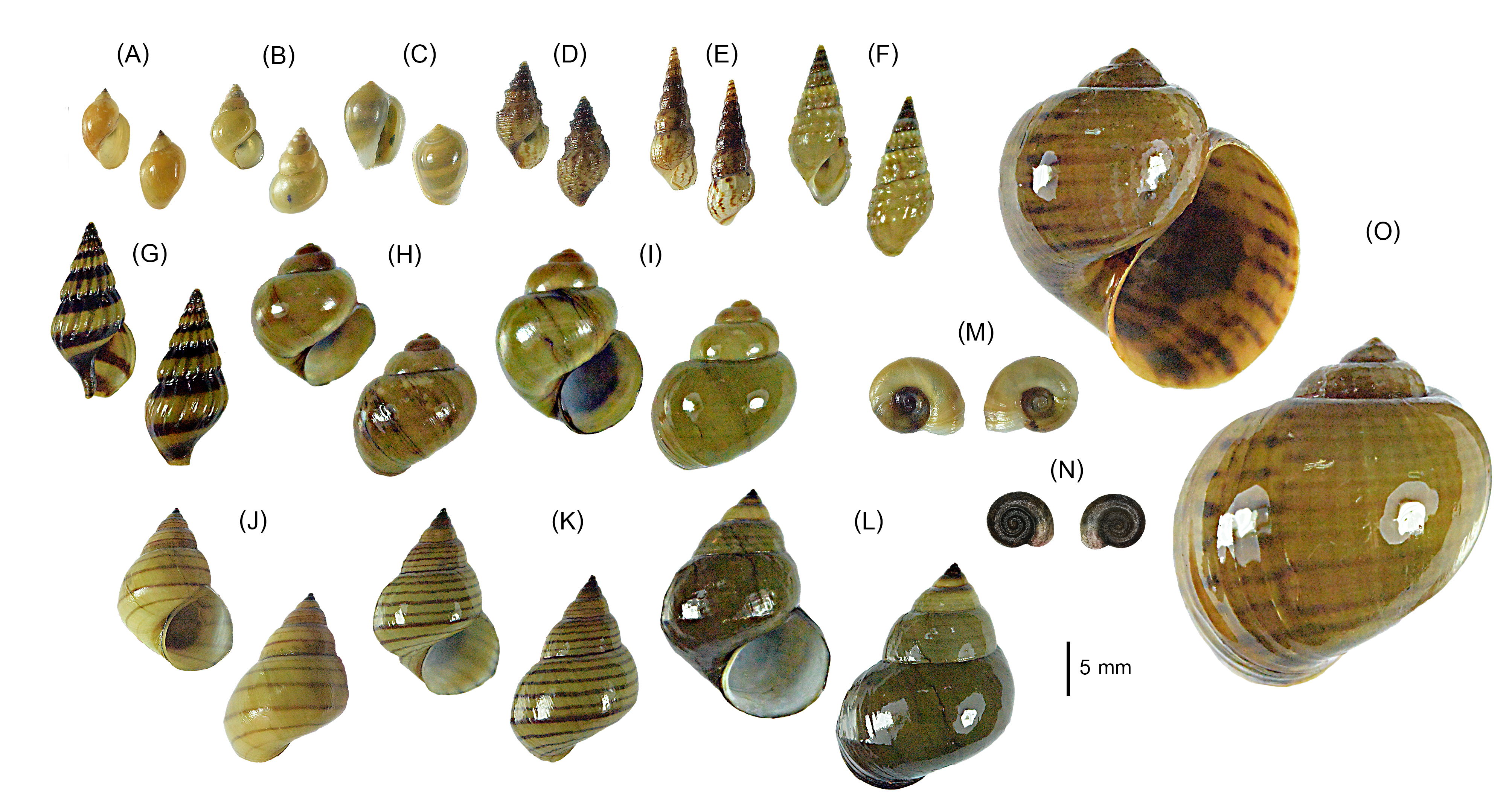
ผลการวิจัย : พบหอยฝาเดียวทั้งหมด 970 ตัว สามารถระบุชนิดหอยฝาเดียวด้วยลักษณะทางสัณฐานวิทยาออกเป็น 15 ชนิด ดังนี้ Radix rubiginosa 5 ตัว, Bithynia siamensis siamensis 187 ตัว, Rivomarginella morrisoni 1 ตัว, Mieniplotia scabra 118 ตัว, Melanoides tuberculata 8 ตัว, Tarebia granifera 362 ตัว, Anentome helena 183 ตัว, Mekongia swainsoni braueri 8 ตัว, M. s. swainsoni 2 ตัว, Filopaludina filosa 1 ตัว, F. sumatrensis polygramma 23 ตัว, F. martensi martensi 63 ตัว, Indoplanorbis exustus 6 ตัว, Gyraulus convexiusculus 1 ตัว และ Pomacea canaliculata 2 ตัว หลังจากนั้น ทำการตรวจสอบการติดเชื้อปรสิตด้วยวิธี shedding และวิธี crushing พบหอยที่มีการติดเชื้อทั้งหมด 14 ตัว คิดเป็นอัตราการติดเชื้อปรสิตทั้งหมด 1.44% (14/970) พบหอยที่ติดเชื้อทั้งหมด 5 ชนิด โดยหอยฝาเดียว M. scabra พบการติดเชื้อมากที่สุด เมื่อทำการจำแนกชนิดพยาธิใบไม้สามารถระบุชนิดตัวอ่อนพยาธิใบไม้ระยะเซอร์คาเรียด้วยลักษณะทางสัณฐานวิทยาได้ทั้งหมด 3 รูปแบบ 4 ชนิด ดังนี้ รูปแบบที่ 1 Xiphidiocercariae (Maritreminoides obstipus, Loxogenoides bicolor), รูปแบบที่ 2 Cotylomicrocercous cercariae (Coitocaecum anaspidis), และรูปแบบที่ 3 Parapleurolophocercous cercariae (Acanthotrema tridactyla) อย่างไรก็ตาม การศึกษาครั้งนี้ทำให้ทราบชนิดหอยฝาเดียวที่สามารถเป็นโฮสต์กึ่งกลางให้กับพยาธิใบไม้ได้หลายชนิด ซึ่งพบหอย 5 ชนิด ที่จัดอยู่ในวงศ์ Thiaridae (M. scabra, T. granifera), Viviparidae (F. s. polygramma, F. m. martensi), และ Nassariidae (A. helena) ที่สามารถเป็นโฮสต์กึ่งกลางตัวที่หนึ่งของพยาธิใบไม้ลำไส้และเจริญเป็นตัวเต็มวัยได้ในปลา กบ นก และคน ถึงแม้ว่าอัตราการติดเชื้อพยาธิใบไม้โดยรวมจะอยู่ในระดับต่ำ แต่การตรวจพบตัวอ่อนระยะเซอร์คาเรียที่มีความสำคัญทางการแพทย์นั้นก็จะช่วยประเมินถึงความเสี่ยงที่อาจจะเกิดขึ้น จากการติดเชื้อพยาธิใบไม้ได้
สรุปผลการวิจัย : การศึกษานี้พบหอยฝาเดียวหลายชนิดในจังหวัดสระบุรี โดยสามารถระบุชนิดหอยฝาเดียวด้วยลักษณะทางสัณฐานวิทยาได้ทั้งหมด 15 ชนิด ได้แก่ R. rubiginosa, B. s. siamensis, R. morrisoni, M. scabra, M. tuberculata, T. granifera, A. helena, M. s. braueri, M. s. swainsoni, F. filosa, F. s. polygramma, F. m. martensi, I. exustus, G. convexiusculus และ P. canaliculata สำหรับการติดเชื้อพยาธิใบไม้ของหอยฝาเดียวในจังหวัดสระบุรี พบหอยฝาเดียวที่เป็นโฮสต์กึ่งกลางตัวที่หนึ่งทั้งหมด 5 ชนิด ได้เเก่ A. helena, M. scabra, T. granifera, F. m. martensi และ F. s. polygramma และพบชนิดตัวอ่อนพยาธิใบไม้ลำไส้ในระยะเซอร์คาเรีย ทั้งหมด 4 ชนิด ได้แก่ M. obstipus, L. bicolor, C. anaspidis, และ A. tridactyla โดยพยาธิใบไม้ A. tridactyla มีการติดเชื้อในหอยฝาเดียวได้หลายชนิดมากที่สุด ดังนั้นการทราบชนิดตัวอ่อนพยาธิใบไม้ระยะเซอร์คาเรียจะช่วยทำให้ประเมินความเสี่ยงในการเกิดโรคพยาธิใบไม้ และทราบการปรับตัวของตัวอ่อนพยาธิใบไม้ที่อาศัยอยู่ในหอยที่เป็นโฮสต์กึ่งกลางได้ เพื่อเป็นแนวทางในการควบคุมป้องกันโรคพยาธิใบไม้ในประเทศให้มีศักยภาพมากยิ่งขึ้น
เอกสารอ้างอิง
Al-Kandari, W. Y., Alnaqeeb, M. A., Isaac, A. M., & Al-Bustan, S. A. (2015). Molecular characterization of Stictodora tridactyla (Trematoda: Heterophyidae) from Kuwait Bay using rDNA ITS and mtCO1. Parasitology research, 114, 4259-4266.
Anantaphruti, M. T., Nawa, Y., & Vanvanitchai, Y. (2011). Human sparganosis in Thailand: an overview. Acta Tropica, 118, 171-176.
Apiraksena, K., Namchote, S., Komsuwan, J., Dechraksa, W., Tharapoom, K., Veeravechsukij, N., Glaubrecht, M., & Krailas, D. (2020). Survey of Stenomelania Fisher, 1885 (Cerithioidea, Thiaridae): The potential of trematode infections in a newly-recorded snail genus at the coast of Andaman Sea, South Thailand. Zoosystematics and Evolution, 96(2), 807-819.
Brandt, A. M. (1974). The non-marine aquatic Mollusca of Thailand. Frankfurt: Arch Moll Band 105.
Chai, J. Y. (2009). Echinostomes in humans. In R. Toledo & B. Fried (Eds.), The biology of echinostomes: from the molecule to the community (pp. 147–183). New York: Springer. doi.org/10.1007/978-0-387-09577-6_7
Chai, J. Y., Sohn, W. M., Na, B. K., & Nguyen, V. D. (2011). Echinostoma revolutum: metacercariae in Filopaludina snails from Nam Dinh Province, Vietnam, and adults from experimental hamsters. The Korean Journal of Parasitology, 49(4), 449-455. doi.org/10.3347/kjp.2011.49.4.449
Chantima, K., Chai, J.Y., & Wongsawad, C. (2013). Echinostoma revolutum: Freshwater Snails as the Second Intermediate Hosts in Chiang Mai, Thailand. The Korean Journal of Parasitology, 51(2), 183-189.
Chontananarth, T., & Wongsawad, C. (2013). Epidemiology of cercarial stage of trematodes in freshwater snails from Chiang Mai province, Thailand. Asian Pacific Journal of Tropical Biomedicine, 3(3), 237–243. doi.org/10.1016/s2221-1691(13)60058-1
Dechruksa, W., Glaubrecht, M., & Krailas, D. (2017). Natural trematode infections of freshwater snail Melanoides jugicostis Hanley & Theobald, 1876 (Family Thiaridae), the first intermediate host of animal and human parasites in Thailand. Silpakorn University Science and Technology Journal, 11(1), 9-16.
Dechruksa, W., Krailas, D., Ukong, S., Inkapatanakul, W., & Koonchornboon, T. (2007). Trematode infections of the freshwater snail family Thiaridae in the Khek river, Thailand. Southeast Asian Journal of Tropical Medicine and Public Health, 38(6), 1016-1028.
Ito, J. (1980). Studies on cercariae in Japan. Shizuoka: Shizuoka University Press.
Khosravi, M., Díaz-Morales, D. M., Thieltges, D. W., Wahl, M., & Vajedsamiei, J. (2023). Thermal optima of cercarial emergence in trematodes from a marine high-temperature ecosystem, the Persian Gulf. Scientific Reports, 13, 1-10. doi.org/10.1038/s41598-023-31670-0
Krailas, D., Chotesaengsri, S., Dechruksa, W., Namchote, S., Chuanprasit, C., Veeravechsukij, N., Boonmekam, D., & Koonchornboon, T. (2012). Species diversity of aquatic mollusks and their cercarial infections; Khao Yai National Park, Thailand. The Journal of Tropical Medicine and Parasitology, 35(2), 37-47.
Krailas D., Namchote S., Koonchornboon T., Dechruksa W., Boonmekam D. (2014). Trematodes obtained from the thiarid freshwater snail Melanoides tuberculata (Müller, 1774) as vector of human infections in Thailand. Zoosystematics and Evolution, 90(1), 57-86. doi.org/10.3897/zse.90.7306
Krailas, D., Namchote, S., Komsuwan, J., Wongpim, T., Apiraksena, K., Glaubrecht, M., Sonthiporn, P., Sansawang, C., & Suwanrit, S. (2022). Cercarial dermatitis outbreak caused by ruminant parasite with intermediate snail host: schistosome in Chana, South Thailand. Evolutionary Systematics, 6, 151–173. doi.org/10.3897/evolsyst.6.87670
Krairut, P., Thawnon-ngiw, B., & Kongim, B. (2020). Genetic diversity of genus Filopaludina in the upper northeastern Mekong Basin of Thailand revealed by mitochondrial DNA sequences. Interdisciplinary Research Review, 15(3). 39-43.
Macfarlane, V. W. (2009). Life cycle of Coitocaecum anaspidis Hickman, a New Zealand digenetic trematode. New Zealand Journal of Zoology, 31(2), 172-184.
Namchote, S., Sritongtae, S., Butnin, S., Wongwain, P., & Krailas, D. (2015). Larval stage of trematodes obtained from brackish water snails in the central and east coast of the Gulf of Thailand. Scientific Research and Essays, 10(11), 386–401. doi.org/10.5897/SRE2015.6160
Noikong, W., & Wongsawad, C. (2014). Epidemiology and molecular genotyping of echinostome metacercariae in Filopaludina snails in Lamphun Province, Thailand. Asian Pacific Journal of Tropical Medicine, 7(1), 26-29.
Olivier, L. J., & Schneiderman, M. (1956). A method for estimating the density of aquatic snail populations. Experimental Parasitology, 5, 109–117. doi.org/10.1016/0014-4894(56)90008-X
Pratumsrikajorn, P., Namchote, S., Boonmekam, D., Koonchornboon, T., Glaubrecht, M., & Krailas, D. (2017). Cercarial Infections of Freshwater Snail Genus Brotia in Thailand. Science, Engineering and Health Studies, 9-15.
Rungsiwiwat, A., Rayan, S., & Chartchumni, B. (2018). Abundance of freshwater gastropods and correlation with water quality in Nam Oun Reservoir, Sakon Nakhon Province. Journal of Science and Technology Ubon Ratchathani University, 21, 21-26. (in Thai)
Schell, S. C. (1962). Parasitology laboratory manual. New York & London: John Wiley & Sons, Inc.
Schell, S. C. (1970). How to know the Trematodes. Iowa: Wm. c. Brown Company Publishers.
Srisonti, D. (1997). Lung fluke. Bangkok: Living Transmedia. (in Thai)
Toledo, R., Alvarez-Izquierdo, M., Esteban, J. G., & Munoz-Antoli, C. (2022). Neglected food-borne trematodiases: echinostomiasis and gastrodiscoidiasis. Parasitology, 149(10), 1319-1326. doi.org/10.1017/S0031182022000385
Toledo, R., & Esteban, J. G. (2016). An update on human echinostomiasis. Transactions of the Royal Society of Tropical Medicine and Hygiene, 110(1), 37-45. doi.org/10.1093/trstmh/trv099
Ukong, S., Krailas, D., Dangprasert, T., & Channgarm, P. (2007, April). Studies on the morphology of cercariae obtained from freshwater snails at Erawan Waterfall, Erawan National Park, Thailand. The Southeast Asian Journal of Tropical Medicine and Public Health, 38(2), 302–312.
Upatham, E. S., Sornmani, S., Kittikoon, V., Lohachit, C., & Burch, J. B. (1983). Identification key for fresh and brackish water snails of Thailand. Malacological Review, 16, 107-132.
Veeravechsukij, N., Namchote, S., Neiber, M. T., Glaubrecht, M., & Krailas, D. (2018). Exploring the evolutionary potential of parasites: Larval stages of pathogen digenic trematodes in their thiarid snail host Tarebia granifera in Thailand. Zoosystematics and Evolution, 94(2), 425–460. doi.org/10.3897/zse.94.28793
Wiroonpan, P., Chontananarth, T., & Purivirojkul, W. (2021). Cercarial trematodes in freshwater snails from Bangkok, Thailand: prevalence, morphological and molecular studies and human parasite perspective. Parasitology, 148(3), 366-383. doi.org/10.1017/S0031182020002073
Wongpim, T., Komsuwan, J., Janmanee, C., Thongchot, P., Limsampan, S., Wichiannarat, N., Chaowatut, W., Suwanrat, S., Dechruksa, W., Veeravechsukij, N., Glaubrecht, M., & Krailas, D. (2023). Freshwater pulmonate snails and their potential role as trematode intermediate host in a cercarial dermatitis outbreak in Southern Thailand. Evolutionary systematics, 7(2), 293-315.
Yamaguti, S. (1975). A synoptical review of life histories of digenetic Trematode of Vertebrates. Tokyo: Keigaku publishing.
Yoonuan, T., Vanvanitchai, Y., Dekumyoy, P., Komalamisra, C., Kojima, S., & Waikagul, J. (2008). Paragonimiasis prevalences in Saraburi province, Thailand, measured 20 years apart. The Southeast Asian Journal of Tropical Medicine and Public Health, 39(4), 593 – 600.
ดาวน์โหลด
เผยแพร่แล้ว
รูปแบบการอ้างอิง
ฉบับ
ประเภทบทความ
สัญญาอนุญาต
ลิขสิทธิ์ (c) 2026 คณะวิทยาศาสตร์ มหาวิทยาลัยบูรพา

อนุญาตภายใต้เงื่อนไข Creative Commons Attribution-NonCommercial-NoDerivatives 4.0 International License.
Burapha Science Journal is licensed under a Creative Commons Attribution-NonCommercial-NoDerivatives 4.0 International (CC BY-NC-ND 4.0) licence, unless otherwise stated. Please read our Policies page for more information